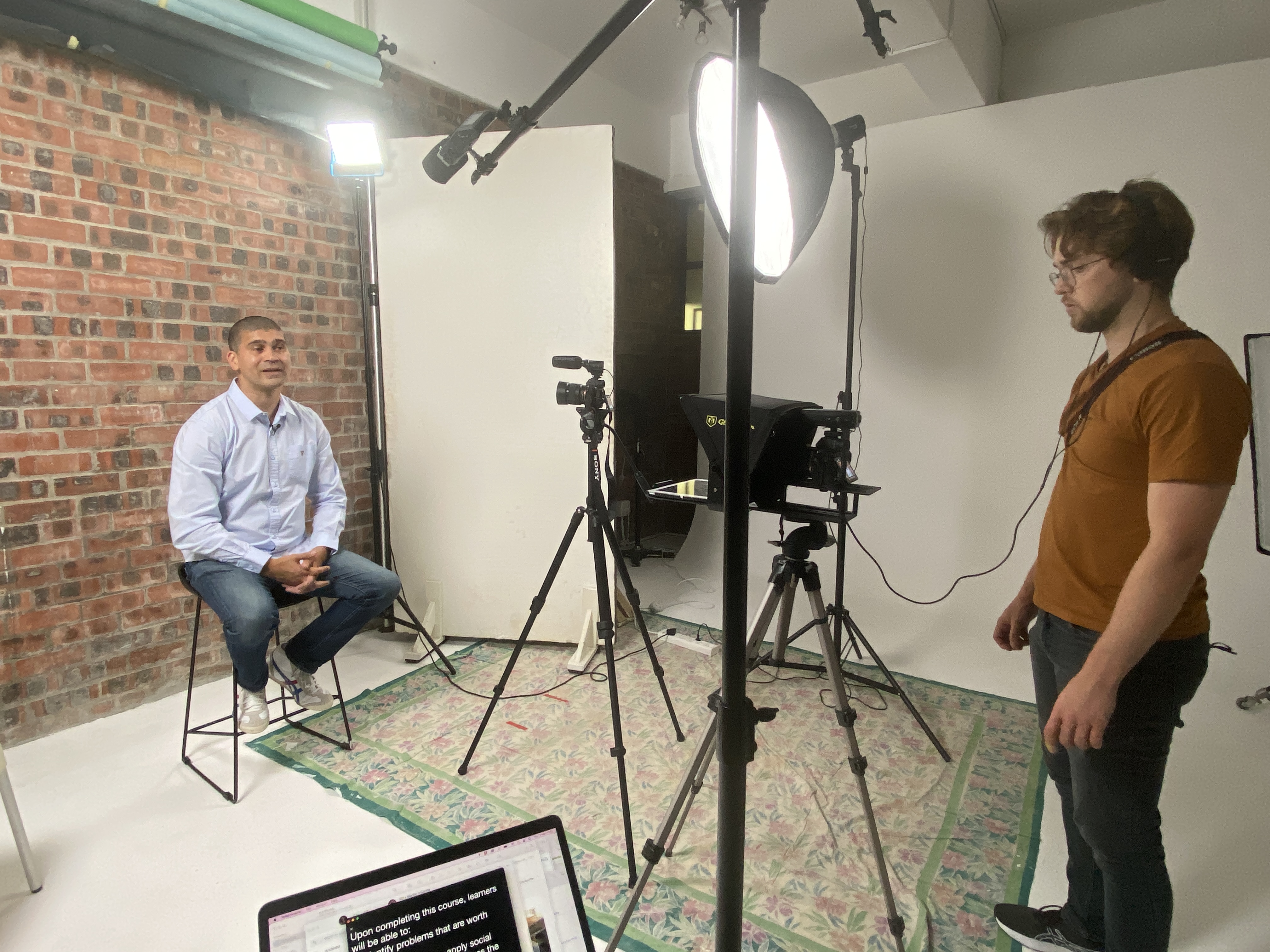
Talking head video is one of the most requested formats we shoot - testimonials, thought leadership, investor updates, internal comms - and also one of the easiest to get wrong. There's nowhere to hide a bad setup when the whole frame is one person speaking to camera. A stiff, badly lit talking head reads as amateur no matter how good the message is; a well-shot one can carry an entire campaign on its own.
What "talking head" actually means
The term covers a wide range of formats: a single-camera executive interview, a two-camera testimonial for a case study, a multi-subject series for internal comms, or a seated Q&A used as raw material for social cutdowns. What they share is the format's core promise - a person, speaking directly and credibly, without the visual distraction of a busier scene. That simplicity is exactly why the technical execution has to be right; there's no b-roll to hide behind if the lighting is flat or the audio is muddy.
Lighting comes before everything else
A three-point lighting setup - key, fill, and a soft backlight to separate the subject from the background - is non-negotiable for us. The key light shapes the face and gives it dimension; the fill softens shadows without flattening the image; the backlight (sometimes called a rim or hair light) lifts the subject away from whatever's behind them, which matters even more on a plain office background than on a styled set. It's the single biggest difference between footage that reads as "corporate stock" and footage that reads as intentional, broadcast-quality production.
Colour temperature matters just as much as placement. Mixing daylight from a window with warm indoor bulbs without correcting for it is one of the most common mistakes we see in DIY interview setups - it shows up as an unnatural colour cast that no amount of grading fully fixes afterward. We always control or eliminate ambient light sources rather than trying to blend with them.
Direction matters more than the subject realises
Most people have never been interviewed on camera before, and it shows in stiff posture and rehearsed-sounding answers. We spend the first five minutes off-camera, just talking, before we ever roll - it relaxes the subject and gives us their natural speech rhythm to work with. We also avoid asking people to memorise scripted lines verbatim; instead we work from a list of key points and let them answer in their own words, then select the cleanest take in the edit. Answers delivered this way sound far more credible than a recited script, even when the underlying message is identical.
Framing and eyeline choices change how the interview feels
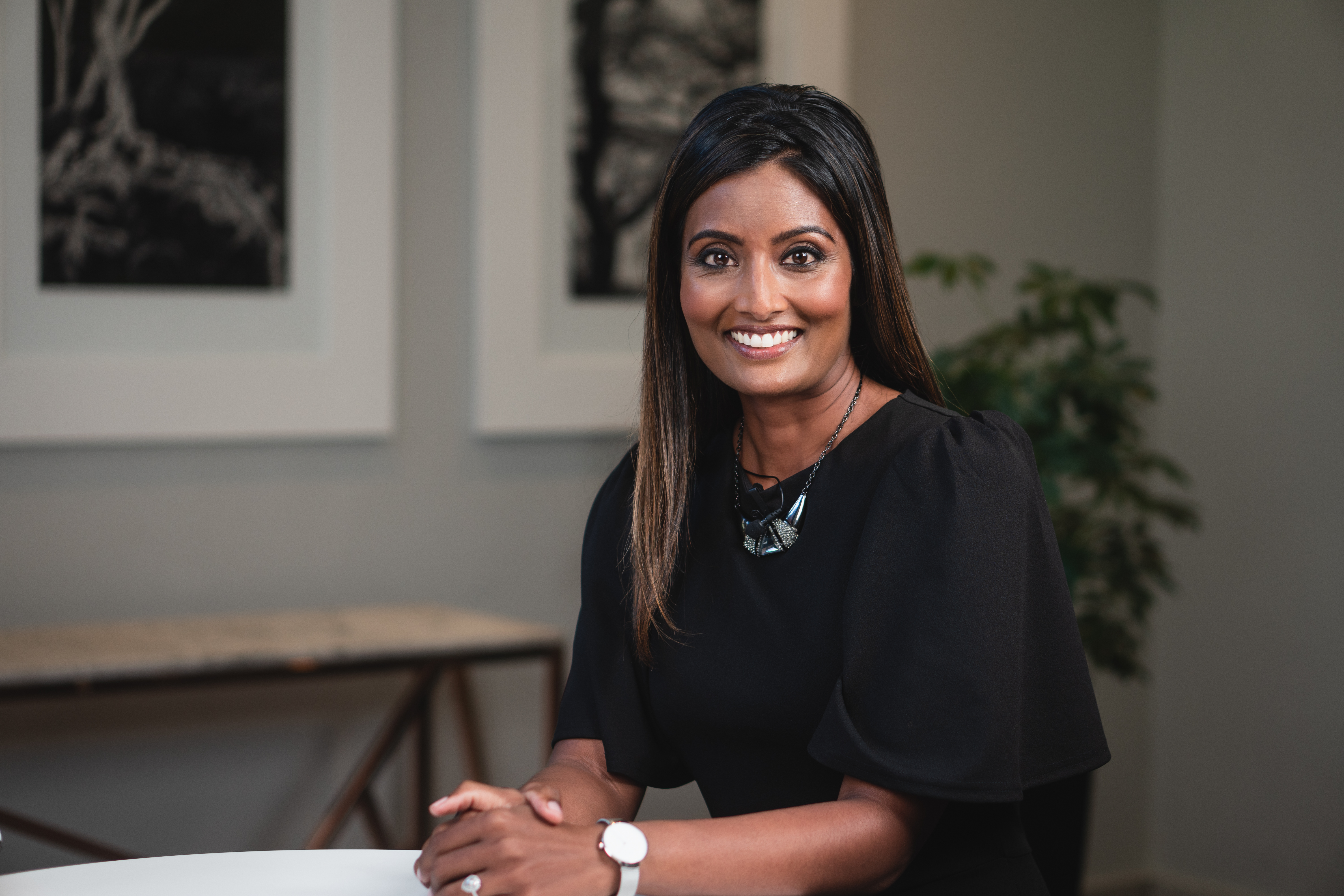
A classic broadcast interview has the subject looking slightly off-camera at an interviewer positioned just beside the lens - this creates a natural, conversational feel and is the standard choice for testimonials and thought-leadership content. A direct-to-camera setup, where the subject looks straight into the lens, feels more intimate and works well for a CEO addressing staff or a founder speaking directly to customers. Neither is "more correct" - the choice should match the purpose of the video, and we talk this through with clients at the brief stage rather than defaulting to one style.
Sound is half the interview
A lavalier mic close to the chest, plus a boom as backup, gives us clean dialogue regardless of room acoustics. Viewers forgive average visuals far more readily than they forgive audio they have to strain to hear - it's one of the fastest ways a video signals "unprofessional," even if the picture quality is excellent. Rooms with hard floors, glass walls, or high ceilings need acoustic treatment or a change of location; we always do a room test before committing to a space for an interview shoot.
Where talking head video fits into a wider content plan
A single strong interview rarely stands alone in a modern content plan. Once we've captured a clean, well-lit talking head, that footage becomes raw material for a corporate video hero piece, a series of short social cutdowns, and quote graphics pulled from the transcript - all from one shoot day. If your interview subject is also involved in a launch or campaign, it's worth planning the shoot alongside any promotional video work so both can share lighting setup and crew time.
Frequently asked questions
How long should a talking head interview shoot take?
For a single subject, budget 60-90 minutes on-site: 20-30 minutes for lighting and sound setup, 10-15 minutes to settle the subject, and 30-45 minutes of actual interview time to get enough usable answers for editing flexibility.
Can we shoot talking head interviews at our own office?
Yes, and we usually recommend it - a familiar environment puts subjects at ease. We bring lighting and sound equipment to control the space rather than relying on the office's existing light and acoustics.
How many people can we interview in one day?
Once lighting is set for a fixed position, we can typically move through 4-6 subjects in a day if they're rotating through the same seat and background. Moving locations between subjects reduces that number.
Do you provide interview questions, or do we?
Both work - we can develop a question list aligned to your objectives, or work from questions you provide. Either way, we brief the subject beforehand so nothing comes as a surprise on the day.